Mary Magdalene
A faithful disciple of Jesus from whom seven demons were cast out, later becoming the first witness to the Resurrection.
Mary Magdalene is one of the most prominent female figures in the New Testament, identified uniquely by her hometown of Magdala, a fishing village on the Sea of Galilee. Unlike many women in the ancient world who were identified by their relationship to a male relative (such as 'wife of' or 'daughter of'), Mary is distinguished by her geographic origin and her personal history of transformation through the ministry of Jesus.
She is introduced in the Gospel accounts as a woman who had been afflicted by severe spiritual and physical suffering. Following her healing by Jesus, she became a devoted follower and a benefactor of his traveling ministry. Her presence is consistently noted at the most critical moments of the New Testament narrative, including the crucifixion and the discovery of the empty tomb.
Background and Family
Mary Magdalene's name suggests she hailed from Magdala, a prosperous center of the salted fish industry on the western shore of the Sea of Galilee. This designation serves as a primary identifier in all four Gospels (Matthew, Mark, Luke, and John). While the New Testament provides no specific details regarding her lineage, marital status, or age, it portrays her as a woman of some independent means. In Luke 8:1-3, she is listed among a group of women who provided for Jesus' ministry 'out of their own resources,' implying a degree of financial independence and social standing that was notable for the first-century Levant.
The Healing Experience
The defining characteristic of Mary’s early biography is her dramatic restoration by Jesus. The Gospels of Luke and Mark both specify that Jesus cast 'seven demons' out of her. In the biblical context, this indicates a state of extreme spiritual, psychological, or physical distress. This healing serves as the foundation for her enduring loyalty to Jesus. Rather than returning to a private life after her restoration, Mary integrated herself into the itinerant community of disciples, representing those whose lives were radically reordered by the miraculous power of the Messiah.
Major Life Events
Mary Magdalene’s narrative arc follows the trajectory of Jesus’ final years. She was a member of the group of Galilean women who followed Jesus to Jerusalem for his final Passover. While many of the male disciples fled or hid during the Passion, the Gospel records emphasize that Mary remained present. She was a witness to the crucifixion, standing near the cross with the mother of Jesus and other women (John 19:25). She further observed the burial of Jesus by Joseph of Arimathea, noting the location of the tomb (Mark 15:47).
The First Witness of the Resurrection
The most significant event in Mary Magdalene's life occurred on the first day of the week following the crucifixion. According to the Johannine account, Mary went to the tomb while it was still dark and found the stone removed. After alerting Peter and the 'beloved disciple,' she remained at the tomb weeping. It was here that she encountered the risen Christ, initially mistaking him for the gardener. Upon hearing him call her name, she recognized him and was commissioned to tell the other disciples that he had risen. This specific commission earned her the historical title 'Apostolorum Apostola' (Apostle to the Apostles) in early church tradition.
Relationship to Other Biblical Figures
Mary's primary relationship was her discipleship to Jesus. However, she also functioned within a community of women, which included Joanna (the wife of Chuza, Herod’s steward), Susanna, and Mary the mother of James. Within the Apostolic circle, she occupied a unique position as a bridge between the death of Jesus and the beginning of the post-resurrection church. Her report to the eleven disciples was the first announcement of the central tenet of the Christian faith. Despite being a woman in a legal system where female testimony was often undervalued, her role as the primary witness is affirmed across all four canonical Gospels.
Spiritual Significance
Theologically, Mary Magdalene represents the archetypal recipient of divine grace. Her transition from a state of 'seven demons' to being the 'first witness' illustrates the biblical theme of restoration. To biblical scholars, she serves as a corrective to strictly male-centric views of early Christian leadership, demonstrating that women were foundational to the support, witness, and proclamation of the Gospel. Her narrative emphasizes that devotion is born of gratitude; her unwavering presence at the cross and the tomb was the direct result of the liberation she experienced through Jesus’ ministry.
Spiritual Significance
Mary Magdalene holds immense theological significance as the primary witness to the Resurrection, which is the cornerstone event of the New Testament. Her presence at both the foot of the cross and the empty tomb provides a vital narrative link, ensuring the legal and spiritual continuity of the eyewitness testimony regarding Jesus' death and subsequent rising. By choosing a woman with a history of suffering to be his first messenger, Jesus challenged the social norms of the era and underscored the inclusivity of the New Kingdom.
Her life serves as a model of discipleship characterized by persistence and selfless service. In providing financial and logistical support to the ministry of Jesus, she and the other Galilean women ensured the practical viability of his mission. In church history, she remains a symbol of the transformative power of Christ, moving from the margins of society to the very center of the foundational Christian kerygma.
Frequently Asked Questions
What does 'Magdalene' mean?
It is an epithet meaning 'of Magdala,' referring to her hometown, a fishing village on the Sea of Galilee.
Was Mary Magdalene a social outcast?
The Bible identifies her as having been possessed by seven demons, which would have likely caused her significant social and physical distress before Jesus healed her.
What happened to Mary Magdalene after the Resurrection?
The New Testament does not provide further details about her life after she reported the Resurrection to the apostles, though later traditions place her in various locations such as Ephesus or France.
Is she the woman who anointed Jesus' feet?
While often conflated in later tradition, the biblical text does not explicitly identify Mary Magdalene as the unnamed 'sinful woman' who anointed Jesus' feet in Luke 7.
What was her role in Jesus' ministry?
She was a faithful disciple and a financier, helping to fund Jesus' travels and mission using her own resources.
Connected Figures
Jesus
Savior and Teacher
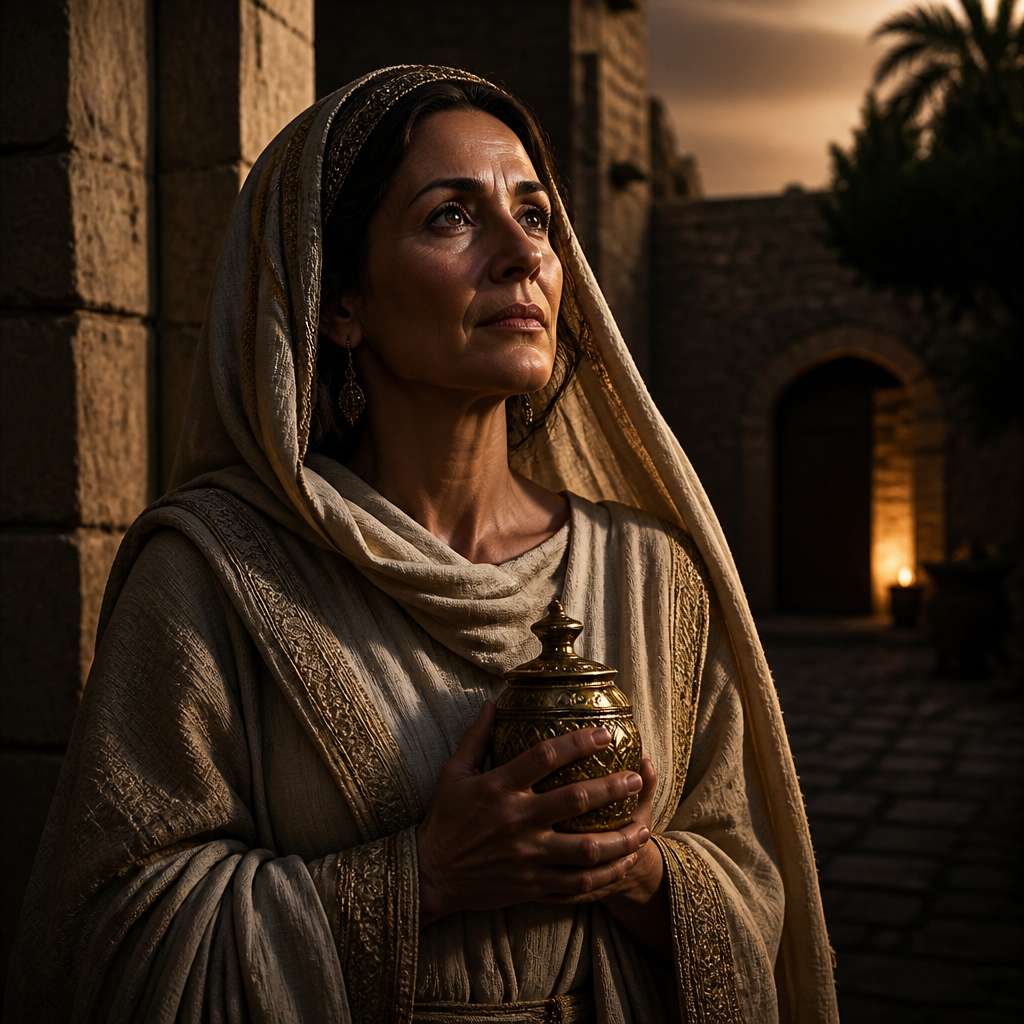
Joanna
Companion and fellow disciple
Mary, mother of Jesus
Companion at the Cross
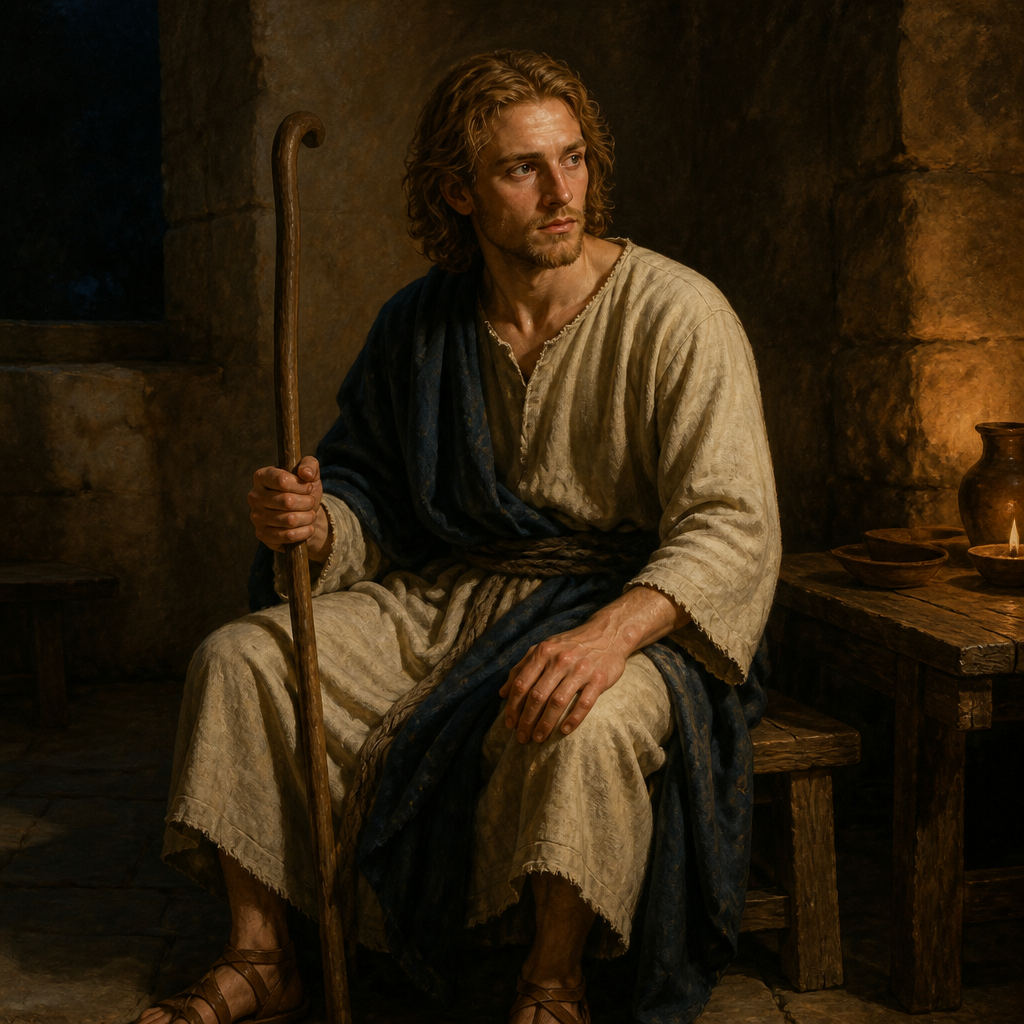
James the Less
His mother was a companion of Mary