Joanna
Joanna was a wealthy woman healed by Jesus who became a prominent disciple and a key witness to the Resurrection.
Joanna is a significant figure in the New Testament, identified specifically in the Gospel of Luke as one of the women who accompanied Jesus during his itinerant ministry. Her presence is notable because she represents the intersection of the early Christian movement with the high-ranking social circles of the Herodian court. As the wife of Chuza, the steward of Herod Antipas, she occupied a position of substantial social standing and financial means.
Her commitment to Jesus began with a transformative experience of healing. Luke records that she was among the women who had been 'cured of evil spirits and diseases.' Following this restoration, Joanna did not simply return to her domestic life in the palace; instead, she utilized her personal resources to support Jesus and the Twelve Apostles, eventually becoming one of the first heralds of the Resurrection.
Background and Family
Joanna occupies a unique sociological niche in the New Testament narrative. She is identified in Luke 8:3 as the wife of Chuza, the epitropos (manager or steward) of Herod Antipas, the tetrarch of Galilee. This position was one of high responsibility, involving the supervision of the royal household, estates, or finances. Consequently, Joanna lived within the upper echelons of Galilean society, likely residing in the administrative centers of Tiberias or Sepphoris.
Her background contrasts sharply with the humble origins of many of the Galilean fishermen who followed Jesus. The fact that she followed a radical itinerant teacher suggests a deep personal conviction that transcended her social status. While the Bible does not detail her life prior to meeting Jesus, her association with the royal court implies she was well-educated and adept at navigating the complex political and social landscapes of 1st-century Roman-occupied Palestine.
Major Life Events
Healing and Early Discipleship
Joanna first appears in the biblical record as part of a group of women who had been healed by Jesus. Luke 8:1–3 describes Jesus traveling through cities and villages proclaiming the Good News, accompanied by the Twelve and certain women, including Mary Magdalene and Susanna. Joanna is specifically noted as having been healed of 'evil spirits and diseases.' This indicates that before her ministry, she suffered from a significant physical or spiritual affliction that common medicine or court physicians could not remedy.
Gratitude for this healing motivated Joanna to join the traveling company of disciples. Unlike the Twelve, who had 'left everything' to follow Jesus, Joanna and the other women are described as providing for the ministry 'out of their own resources.' This financial patronage was essential for the sustenance of Jesus' mission, covering costs for food, lodging, and travel.
Witness to the Passion and Resurrection
Joanna’s faithfulness is most evident during the final days of Jesus’ life. While many of the male disciples fled or remained in hiding following the crucifixion, Joanna remained present. She was among those who watched the burial of Jesus and prepared spices and perfumes to honor his body (Luke 23:55–56).
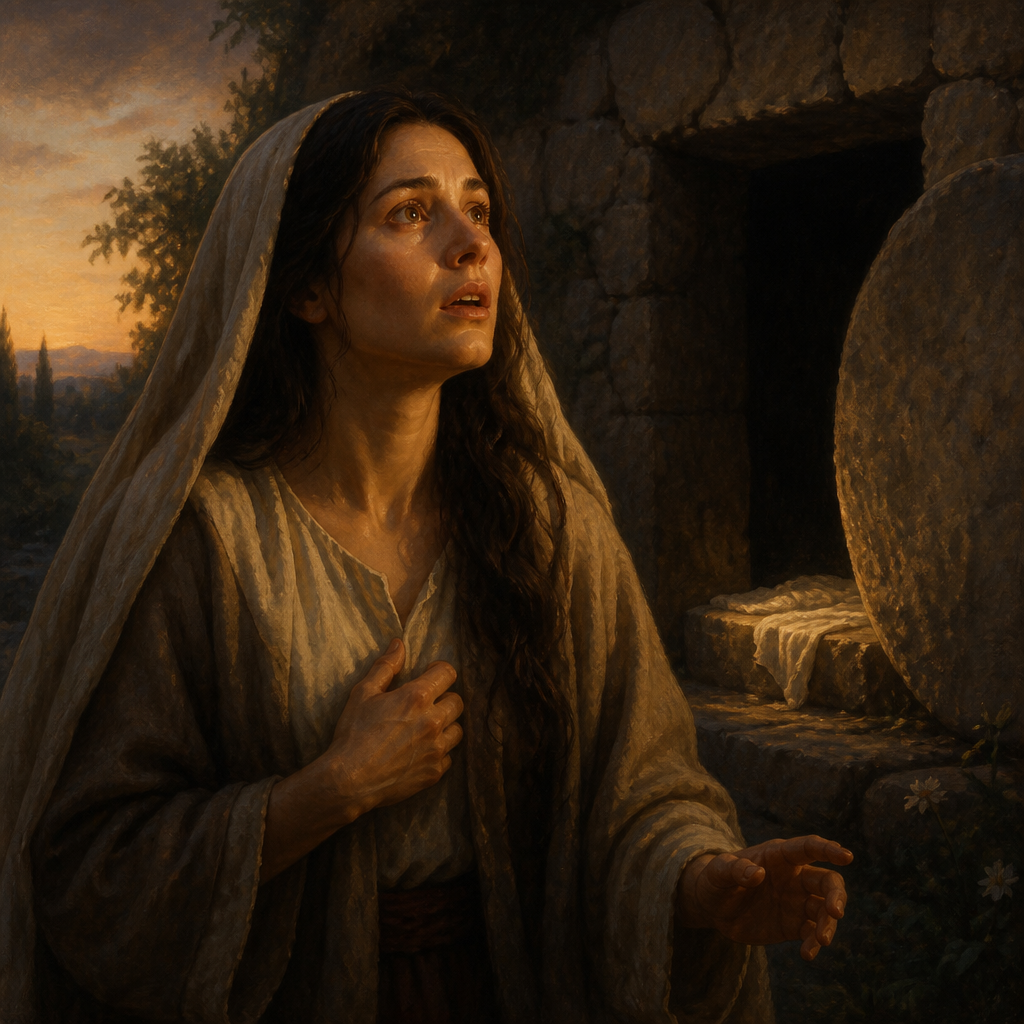
On the first day of the week, Joanna was part of the group that went to the tomb early in the morning and found it empty. According to Luke 24:10, she was one of the specific individuals—alongside Mary Magdalene and Mary the mother of James—who reported the appearance of the angels and the news of the Resurrection to the Eleven Apostles. Despite the cultural skepticism regarding the testimony of women at the time, Joanna stood as a primary witness to the central event of the Christian faith.
Relationship to Other Biblical Figures
Joanna’s primary relationship within the text is her marriage to Chuza. This relationship is crucial for scholars because it explains how information about Herod's court might have reached the early Christian community (such as Herod’s curiosity about Jesus mentioned in Luke 9:7–9).
She also shared a close bond with the inner circle of female disciples. Her frequent pairing with Mary Magdalene suggests a leadership role among the women. Furthermore, her reporting to the Apostles (the 'Eleven') establishes her as a trusted member of the broader community of believers. Some scholars have speculated that she might be the 'Junia' mentioned by Paul in Romans 16:7, though this remains a subject of academic debate and is not explicitly confirmed by the Lucan text.
Spiritual Significance
Joanna serves as a model of stewardship and courageous devotion. Within the context of Luke's Gospel, which emphasizes the dangers of wealth and the importance of using riches for the Kingdom of God, Joanna is the quintessential example of a wealthy person using their means correctly. She did not allow her status to hinder her service; rather, her status became a tool for the gospel’s advancement.
Furthermore, Joanna represents the inclusive nature of Jesus' ministry. By including a woman from the Herodian court as a close follower, the Gospel demonstrates that Jesus’ message reached across political, gender, and social boundaries. Her role as an eyewitness to the Resurrection elevates the status of women in the early church, identifying them as foundational messengers of the most significant miracle in the New Testament.
Spiritual Significance
Joanna is a pivotal figure because she bridges the gap between the marginalized and the elite in the New Testament. As a woman of means and influence, her financial support was practically indispensable to the early ministry of Jesus. Her presence in the Gospel of Luke highlights the historian’s focus on women and the themes of universal salvation, proving that the Gospel resonated with the highest levels of Jewish-Roman society as well as the poor.
Theologically, she serves as a primary eyewitness to the empty tomb. Without the testimony of Joanna and her companions, the narrative of the Resurrection lacks its initial human proclamation. Her transition from a woman needing healing to a woman sustaining the ministry provides a profound narrative arc of restoration and service that has inspired Christian theology regarding discipleship for centuries.
Frequently Asked Questions
What does the name Joanna mean?
The name Joanna is the feminine form of John (Yochanan), meaning 'Yahweh has been gracious' or 'the Lord is gracious.'
Was Joanna a follower of Jesus from the beginning?
The Bible first mentions her during Jesus' Galilean ministry, noting she was healed and then began traveling with him and providing financial support.
What was the occupation of Joanna's husband?
Chuza was the steward (epitropos) to Herod Antipas, meaning he managed the political ruler's household, estates, or administrative affairs.
Is Joanna mentioned in all four Gospels?
No, Joanna is mentioned exclusively in the Gospel of Luke (Luke 8:3 and Luke 24:10).
Did Joanna see the resurrected Jesus?
The Gospel of Luke records that she saw the empty tomb and the angels who announced the Resurrection, and she was among the women who told the Apostles what they had seen.
Connected Figures
Jesus
Teacher and Healer
Chuza
Husband
Mary Magdalene
Fellow Disciple and Witness

Herod Antipas
Employer of her husband