Malchus
Malchus was the high priest's servant whose ear was severed by Simon Peter and subsequently healed by Jesus during the arrest in Gethsemane.
Malchus is a figure of singular importance in the New Testament narrative of the Passion, specifically during the arrest of Jesus in the Garden of Gethsemane. Though he appears in all four canonical Gospels, it is only in the Gospel of John that he is identified by name, and only in the Gospel of Luke that the miraculous restoration of his ear is recorded. As a servant (doulos) of the high priest, likely Caiaphas, Malchus occupied a position of significant trust and authority within the Jewish administrative hierarchy of the first century.
His presence at the arrest suggests he was part of the official delegation sent by the Sanhedrin to apprehend Jesus. The encounter between Malchus, the apostle Peter, and Jesus provides a profound illustration of Christ's rejection of violence and His commitment to mercy even in the face of imminent betrayal and death. Malchus is historically recognized as the final individual to receive a physical healing miracle from Jesus before the crucifixion.
Background and Family
Malchus was a personal servant of the Jewish high priest, a role denoted by the Greek word doulos. In the context of the first-century Judean priesthood, this title often implied more than simple domestic labor; such servants frequently acted as legal agents or high-ranking assistants to the high priest. Given that Caiaphas held the office during the time of Jesus' trial, it is widely concluded that Malchus was directly accountable to him. While the Bible provides no specific details regarding his genealogy or immediate family, the Gospel of John offers a unique detail in chapter 18, mentioning a kinsman of Malchus—another servant of the high priest—who later questioned Peter in the courtyard, asking, 'Did I not see you in the garden with him?' This indicates that Malchus' family or social circle was deeply integrated into the service of the Temple authorities.
Major Life Events
The most significant event in the life of Malchus occurred under the cover of darkness in the Garden of Gethsemane. Following the betrayal by Judas Iscariot, a contingent of Roman soldiers and officials from the chief priests arrived to arrest Jesus. As the tension escalated, Simon Peter, seeking to defend his Master, drew a sword and struck Malchus, severing his right ear. This act of impulsive violence was immediately rebuked by Jesus, who famously commanded Peter to 'put your sword back into its place,' declaring that 'all who take the sword will perish by the sword' (Matthew 26:52).
In a final display of divine compassion, Jesus touched the wound of Malchus and miraculously healed him. This event, recorded in Luke 22:51, is the only instance in the Gospels where a miracle is performed on an individual who was actively participating in Jesus' arrest. Following this healing, the narrative does not explicitly follow Malchus’ life, though his identity was clearly known to the early Christian community, as evidenced by John’s ability to name him several decades later.
Relationship to Other Biblical Figures
Malchus’ primary relationship was with the High Priest Caiaphas, serving as his representative during the legal maneuverings against Jesus. His interaction with Simon Peter is one of sharp contrast: Peter represents the violent, misguided defense of the Messiah, while Malchus is the unintended victim of that zeal.
More importantly, his relationship with Jesus is defined by the transition from captive-taker to recipient of grace. Jesus’ intervention on behalf of Malchus served to protect the disciples from further retaliation; had the ear not been healed, Peter likely would have been arrested and executed for assaulting a high-ranking official's representative. By healing Malchus, Jesus not only demonstrated His divinity but also ensured the safety of His followers and signaled that His kingdom was not of this world.
Spiritual Significance
The healing of Malchus carries deep theological weight. It serves as a practical application of Jesus’ teaching on 'loving one's enemies.' At the moment of His greatest vulnerability, Jesus chose to expend His power not to escape His captors, but to restore a man who was part of the force sent to destroy Him.
Furthermore, the naming of Malchus in the Gospel of John suggests that he may have eventually become known to the early church. Some scholars speculate that he might have even become a believer, as the specific naming of minor characters in the Gospels often served as a 'reference check' for the original audience—inviting readers to seek out the individual for a first-hand account. Whether or not Malchus converted, his story remains a powerful testament to the fact that Christ’s mercy extends even to those who stand in opposition to Him. The restoration of his ear is a symbolic act, perhaps suggesting the opening of ears to hear the truth of the Gospel, which the high priest's party had hitherto rejected.
Spiritual Significance
Malchus serves as a critical figure in the Gethsemane narrative, representing the human face of those who opposed Jesus. His miraculous healing is the last miracle Jesus performed before His resurrection, emphasizing that the mission of Christ remained one of restoration and peace, even in the hour of His betrayal. Historically, Malchus' presence provides administrative context to the arrest, showing it was a combined effort of Roman and Jewish authorities.
Theologically, the Malchus episode highlights the fulfillment of prophecy and the voluntary nature of Christ's sacrifice. By healing the man and rebuking Peter, Jesus demonstrated that He was not a victim of circumstances but a willing participant in the divine plan for atonement, refusing to allow His followers to initiate a worldly insurrection.
Frequently Asked Questions
Which Gospel mentions Malchus by name?
Only the Gospel of John (18:10) mentions Malchus by name. The other three Gospels mention the event but leave him anonymous.
Who cut off Malchus' ear?
The Apostle Simon Peter cut off Malchus' ear with a sword during the arrest of Jesus.
Did Jesus heal Malchus?
Yes, according to the Gospel of Luke (22:51), Jesus touched Malchus' ear and healed him instantly.
What was Malchus' occupation?
He was a servant (specifically an assistant or agent) of the high priest, likely Caiaphas.
Why did Peter attack Malchus?
Peter was attempting to defend Jesus from arrest by the mob and the Roman soldiers in the Garden of Gethsemane.
Connected Figures
Simon Peter
Assailant who cut off his ear
Jesus
Healer who restored his ear
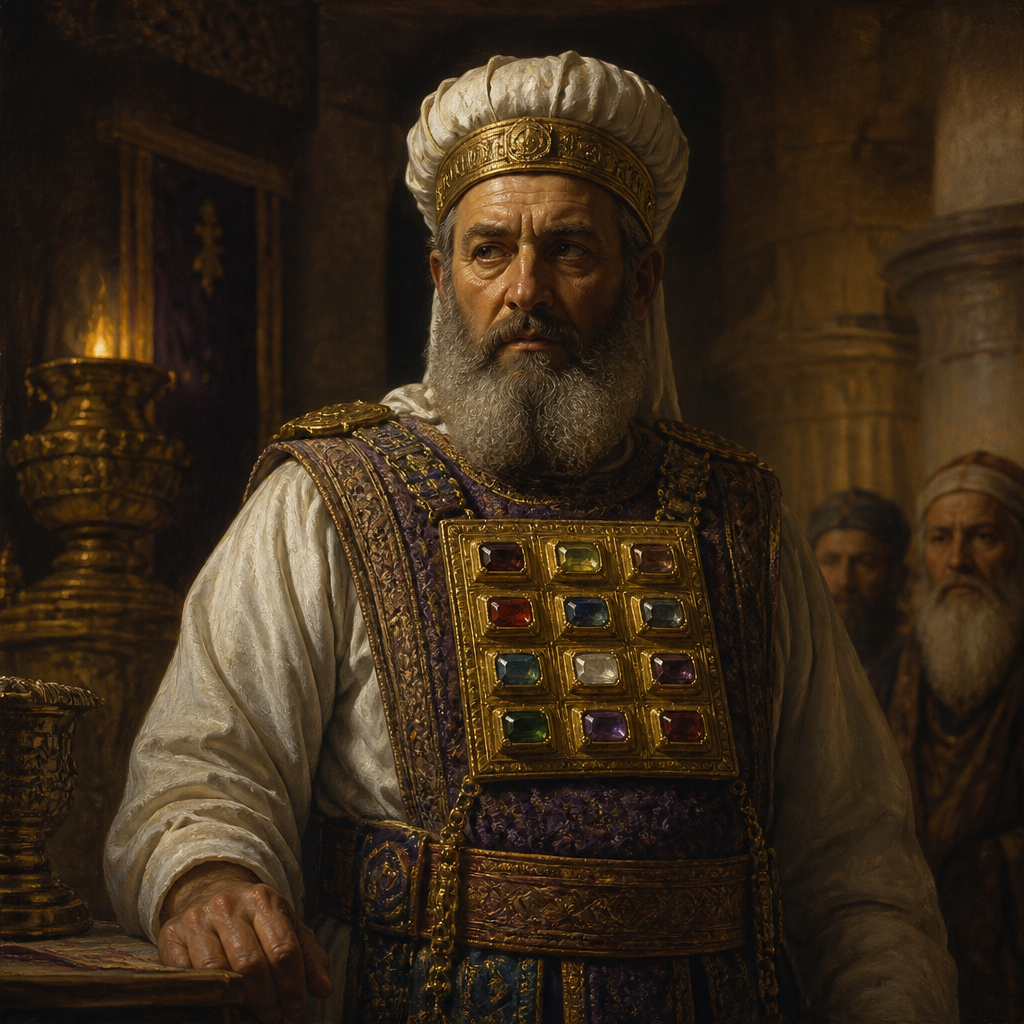
Caiaphas
Master/Employer (High Priest)
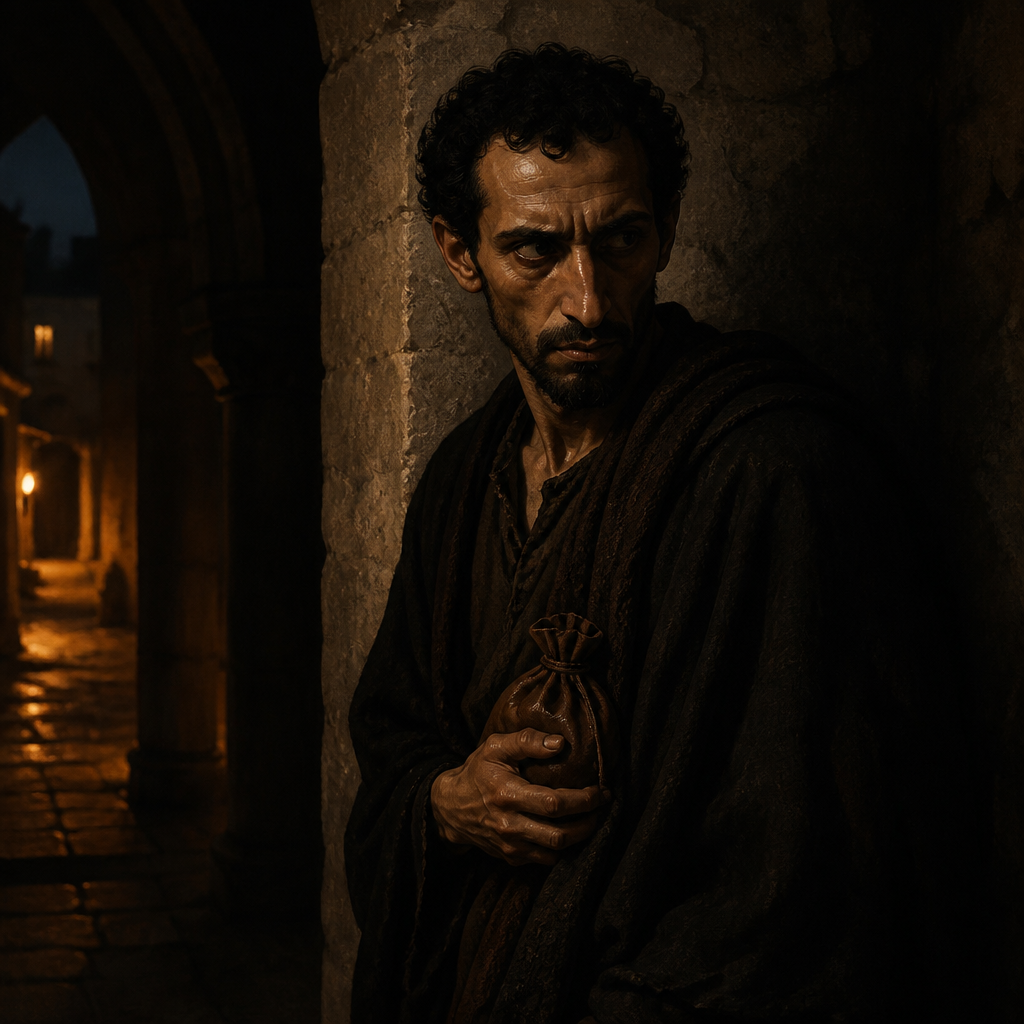
Judas Iscariot
Leader of the arrest party