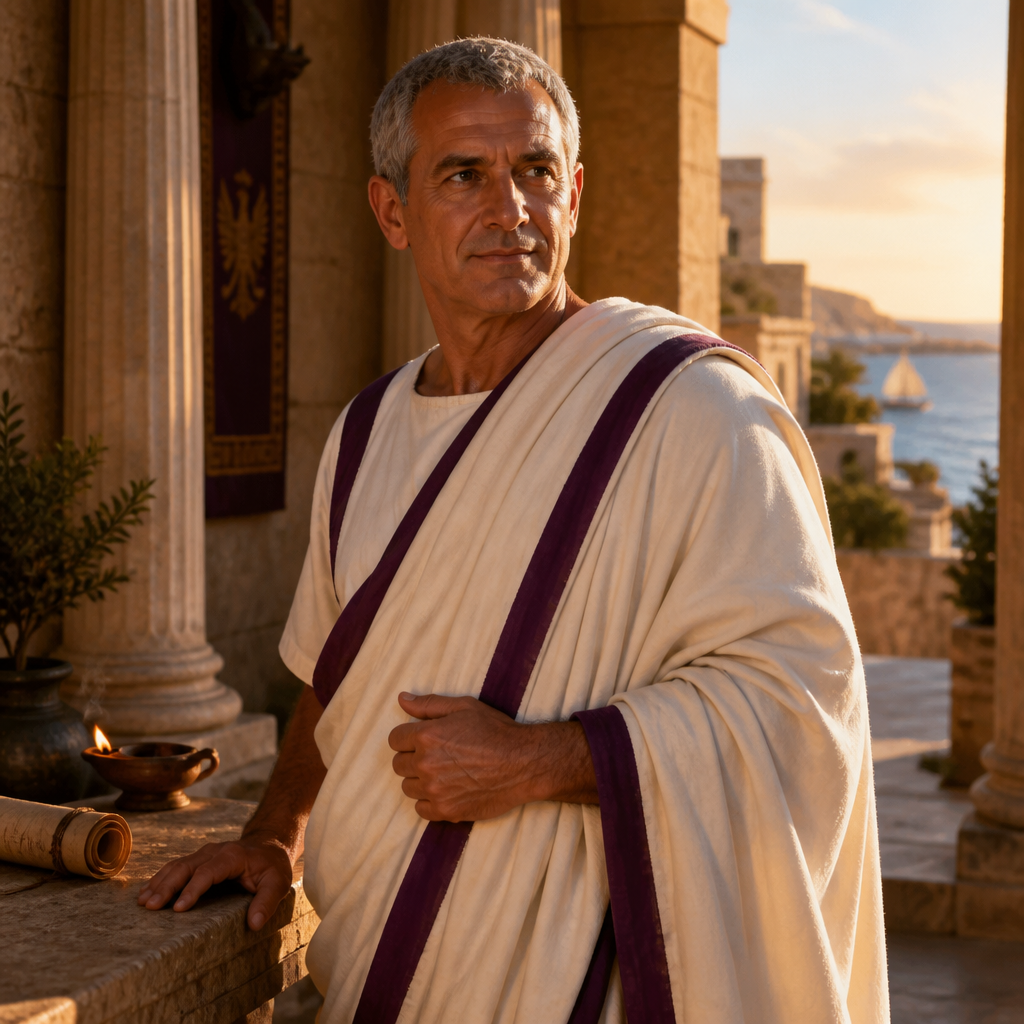
Publius' Father
An unnamed Roman resident of Malta who was miraculously healed of fever and dysentery by the Apostle Paul during the latter's voyage to Rome.
Publius' Father is a figure mentioned in the New Testament book of Acts, specifically during the account of the Apostle Paul’s shipwreck on the island of Malta. As the father of Publius, the 'chief man' or leading Roman official of the island, he occupied a position of social prominence within the Maltese community. However, he is primarily identified through his physical infirmity rather than his own social status or a given personal name.
The interaction between Paul and the father of Publius occurs during a three-month stay on the island following the destruction of the ship carrying Paul to his trial in Rome. The account serves as a pivotal demonstration of apostolic authority and the continuing power of the Holy Spirit post-Pentecost, illustrating the spread of the Gospel to the 'ends of the earth' as promised in the beginning of Acts. The healing of this man catalyzed a season of widespread medical and spiritual restoration among the inhabitants of Malta.
Background and Family
The identity of Publius' Father is inextricably linked to his son, Publius, who is identified in Acts 28:7 as the protos or 'first man' of the island of Malta (Melite). The title protos was a formal Roman designation for the highest-ranking local official, likely acting as a deputy to the praetor of Sicily. This suggests that the family was of significant wealth and Roman equestrian or senatorial standing.
The presence of the father in the household of the chief official indicates a traditional Roman domestic structure, where the patriarch remained a central figure of the estate. The family resided near the site of the shipwreck, likely in the area of modern-day Sali Bay or the ancient capital of Melite (Mdina). Their hospitality towards the 276 survivors of the shipwreck, including Paul and Luke, highlights their resources and their adherence to the Mediterranean code of hospitality (xenia).
Major Life Events
The central event of this man's life recorded in Scripture is his illness and subsequent recovery. According to Acts 28:8, he lay sick with a 'fever and a bloody flux' (KJV), or 'fever and dysentery' in modern translations. Luke, the author of Acts and a physician, utilizes specific medical terminology to describe the condition. Scholars and medical historians often identify this as 'Malta Fever,' now known as Brucellosis, which was endemic to the island for centuries due to the consumption of infected goat's milk.
While the man was incapacitated, the Apostle Paul visited him. The narrative specifies a distinct ritual of healing: Paul entered the room, prayed, and laid his hands on the man. This sequence is significant as it mirrors the healing ministry of Jesus. Following the laying on of hands, the man was instantly cured.
This miracle had an immediate ripple effect throughout the island. Acts 28:9 notes that 'others also, which had diseases in the island, came, and were healed.' While the text does not explicitly record the father's conversion to Christianity, the subsequent three-month period of ministry and the high honors bestowed upon Paul and his companions suggest a profound transformation within the household.
Relationship to Other Biblical Figures
The relationship between Publius' Father and the Apostle Paul is one of the beneficiary to the benefactor of divine grace. Paul, though a prisoner in the custody of a Roman centurion, assumes the role of a spiritual authority within the home of the island's governor. This inversion of power dynamics is a recurring theme in Luke-Acts.
Luke the Evangelist also plays a role as an eyewitness. His clinical description of the father's symptoms provides a unique intersection between the naturalistic observation of a doctor and the supernatural reality of the miracle. The father's son, Publius, acts as the facilitator, hosting the apostolic party for three days before the healing took place. Through this family, the Gospel gained a foothold in the Roman administration of the Mediterranean islands.
Spiritual Significance
The healing of Publius' Father carries significant theological weight. It serves as a fulfillment of Christ's promise in Mark 16:18, which stated that believers would 'lay hands on the sick, and they shall recover.' Coming immediately after Paul's survival of a viper bite, the healing of the father reinforces Paul's identity as a true messenger of God, vindicating him in the eyes of the 'barbarian' (non-Greek speaking) Maltese and the Roman officials alike.
Furthermore, this event demonstrates that the Gospel is not merely a matter of words but of power. By healing the patriarch of the leading family, the Holy Spirit opened a door for the evangelization of the entire island. Tradition holds that this household became the nucleus of the 첫 Maltese church, with Publius eventually serving as the island's first bishop. The father stands as a representative of those whose physical suffering becomes the catalyst for a greater communal encounter with the divine.
Spiritual Significance
Theological significance lies in the validation of the Gospel among the Gentiles and the demonstration of the 'signs and wonders' following the Apostles. The healing of Publius' Father proves that God's grace extends beyond the Jewish community to Roman provincial officials, emphasizing the universal reach of the Christian message. It also highlights the role of prayer and the physical act of laying on of hands in the early church's ministry.
Additionally, the account provides a rare scriptural glimpse into the intersection of medical diagnosis (through Luke's observation) and divine intervention. It serves as a narrative bridge showing that even while Paul was 'in chains' and headed for trial, the Word of God was not bound, and the power of the Spirit continued to operate through him to bless those who provided him with hospitality.
Frequently Asked Questions
What specifically was Publius' Father suffering from?
He was suffering from fever and dysentery (Acts 28:8). Historically, this is often attributed to Malta Fever, caused by Brucella melitensis, a bacteria common in the region's livestock.
Did Publius' Father become a Christian?
The Bible does not explicitly state that he converted, but church tradition suggests he and his son Publius became the first Christians on Malta, with the family home eventually being turned into a church.
Who healed Publius' Father?
The Apostle Paul healed him by praying and laying his hands on him, though the text attributes the power of the healing to God.
Why is the healing of Publius' Father important in the Book of Acts?
It demonstrates that Paul’s apostolic authority remained intact despite his shipwreck and imprisonment, and it led to the healing of many others on the island of Malta.
Where did this healing take place?
It took place on the island of Malta, where Paul and his fellow travelers were stranded for three months during their journey to Rome.