The Naked Young Man
An unidentified youth who fled naked from the Garden of Gethsemane during the arrest of Jesus of Nazareth.
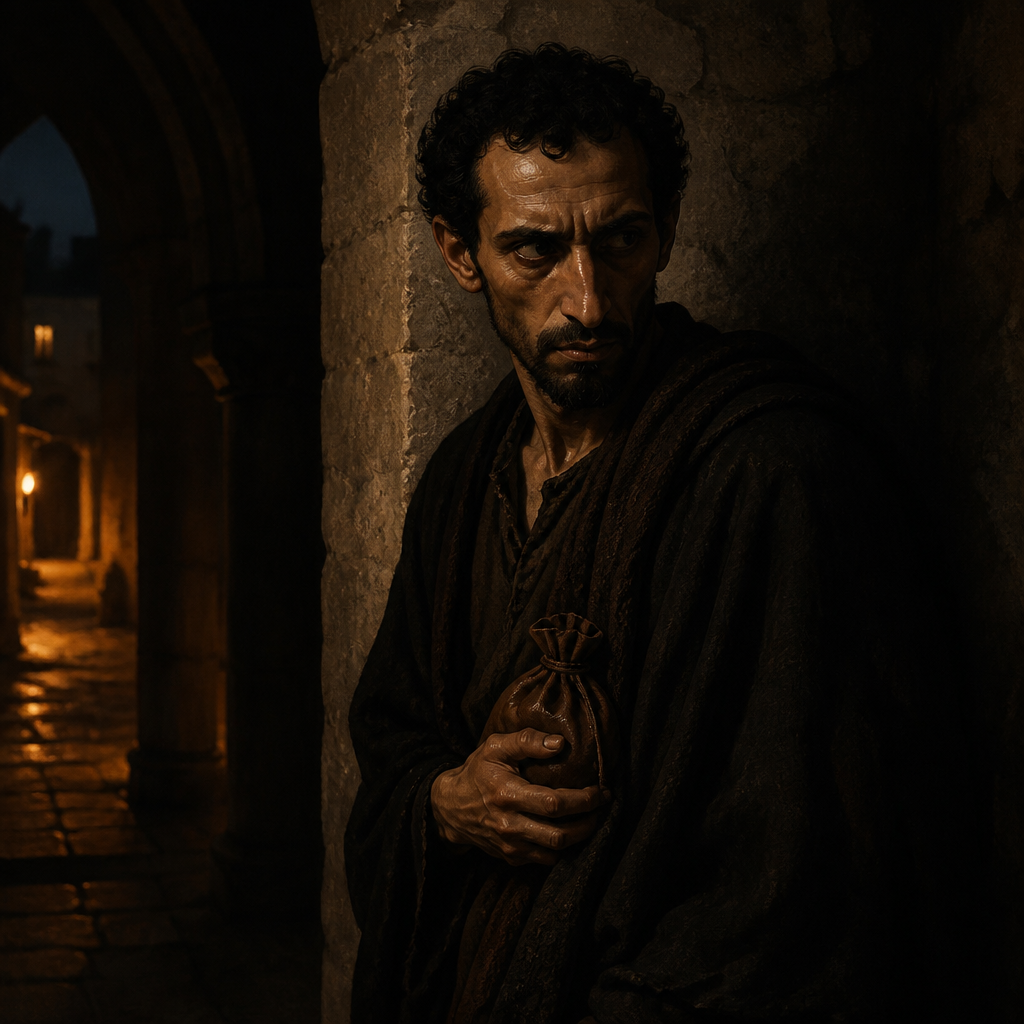
The figure known as the 'Naked Young Man' appears in one of the most enigmatic and debated passages in the New Testament. Mentioned only in the Gospel of Mark (14:51–52), he is described as following Jesus during the arrest in the Garden of Gethsemane, wearing nothing but a linen cloth. When the arresting authorities attempted to seize him, he left the garment in their hands and fled into the night completely naked.
This brief appearance has captivated biblical scholars for centuries. Because the detail is unique to Mark's account and seems to have no immediate impact on the narrative progression of the Passion, it is widely regarded as a 'signature' or a symbolic insertion. The youth’s identity remains a subject of intense academic speculation, with theories ranging from a literal historical participant to a metaphorical representation of discipleship.
Background and Family
Because the Gospel of Mark does not provide a name or lineage for the young man, his background and family remain entirely speculative. The Greek term used to describe him, neaniskos, typically refers to a male between the ages of 24 and 40, though in some contexts it could imply a younger teenager. The detail that he was wearing a 'linen cloth' (sindōn) over his naked body suggests a degree of wealth or status; finely woven linen was an expensive material in 1st-century Judea, often associated with the priestly class or the affluent. Some scholars suggest he may have been a resident of a nearby villa or a member of the household where Jesus celebrated the Last Supper, having been roused from sleep by the commotion of the temple guards.
Major Life Events
The Arrest in Gethsemane
The primary event involving this figure occurs immediately following the betrayal by Judas Iscariot and the arrest of Jesus. As the disciples panicked and fled, the text notes that this specific young man remained, following Jesus at a distance. When the 'certain men' (likely the temple guard or members of the crowd) laid hold of him, the young man performed a desperate act of escape.
'And there followed him a certain young man, having a linen cloth cast about his naked body; and the young men laid hold on him: And he left the linen cloth, and fled from them naked.' (Mark 14:51-52, KJV)
This moment of fleeing in total vulnerability stands as a stark contrast to the preceding scene where Peter and the others promised to die with Jesus.
The Discovery at the Tomb
While not explicitly identified as the same 'Naked Young Man,' many scholars connect this figure to the 'young man' (neaniskos) described in Mark 16:5. In the latter scene, the women visiting the empty tomb find a young man sitting on the right side, clothed in a long white robe. This literary parallel—moving from a state of nakedness (shame/defeat) at the arrest to being clothed in white (glory/resurrection) at the tomb—is a core component of Markan scholarship.
Relationship to Other Biblical Figures
Identification with John Mark
The most enduring tradition, dating back to the early church, is that the young man was John Mark himself, the traditionally attributed author of the Second Gospel. Proponents of this view argue that the detail is so specific and seemingly unnecessary to the plot that it must be an 'authorial signature.' Much like a painter might include a small self-portrait in the corner of a grand mural, Mark may have included his own moment of cowardice and escape as a testament to his presence at the scene.
Connections to Lazarus or James
Alternative theories suggest the young man was Lazarus, newly raised from the dead (explaining the linen shroud), or James the Just. However, these theories often rely on extra-canonical texts or secondary traditions. The text's refusal to name him keeps the focus on his symbolic role within the narrative of the disciples' abandonment of Jesus.
Spiritual Significance
In biblical scholarship, the Naked Young Man serves as a powerful symbol of the failure of discipleship. His flight represents the total fulfillment of Jesus' prophecy that all his followers would fall away (Mark 14:27). To be naked in the biblical context often signifies shame, judgment, or being stripped of one's dignity. By fleeing naked, the young man embodies the utter vulnerability and loss of identity experienced by those who desert the Messiah in His hour of need.
Furthermore, the linguistic link between the young man in Gethsemane and the young man at the tomb suggests a narrative of redemption. If they are intended to be the same figure (or literary counterparts), they illustrate the journey from the shame of the cross to the hope of the resurrection. The linen cloth left behind in Gethsemane mirrors the linen cloths left in the empty tomb, signaling that the grip of death and the powers of the world cannot hold those who are transformed by the Christ event.
Spiritual Significance
The Naked Young Man represents one of the most intriguing literary 'signatures' in the New Testament. Historically, he is often viewed as the author, John Mark, providing a firsthand witness account of the arrest. Theologically, he serves as a representative figure for the reader, illustrating the abrupt transition from following Jesus to fleeing in fear and shame. His presence underscores the totality of Jesus's isolation during the Passion, as even this last remaining follower is forced to strip away everything to escape the authorities.
Frequently Asked Questions
Is the Naked Young Man mentioned in the other Gospels?
No, this specific detail is unique to the Gospel of Mark. Neither Matthew, Luke, nor John mentions a young man fleeing naked during the arrest.
Why would the author include such an embarrassing detail?
Scholars believe it serves as a 'watermark' of authenticity or a symbolic depiction of the disciples' total failure and the desertion of Jesus.
Was he wearing clothes under the linen cloth?
The Greek text suggests the linen cloth was his only covering (*epi gymnou*), meaning he was otherwise unclothed when he fled.
Could the young man be an angel?
While some interpret the 'young man' at the empty tomb as an angel, the figure in Gethsemane is generally viewed as a human participant due to his fear and physical flight.
How does the linen cloth relate to the burial of Jesus?
The word for linen cloth (*sindon*) is the same word used for the shroud Joseph of Arimathea used to wrap Jesus' body, potentially foreshadowing the burial.
Connected Figures
Jesus of Nazareth
The one he was following
John Mark
Commonly identified as this figure
Judas Iscariot
Witnessed the arrest initiated by Judas