Legion
The collective name used by the demons who possessed the Gerasene man before Jesus cast them out
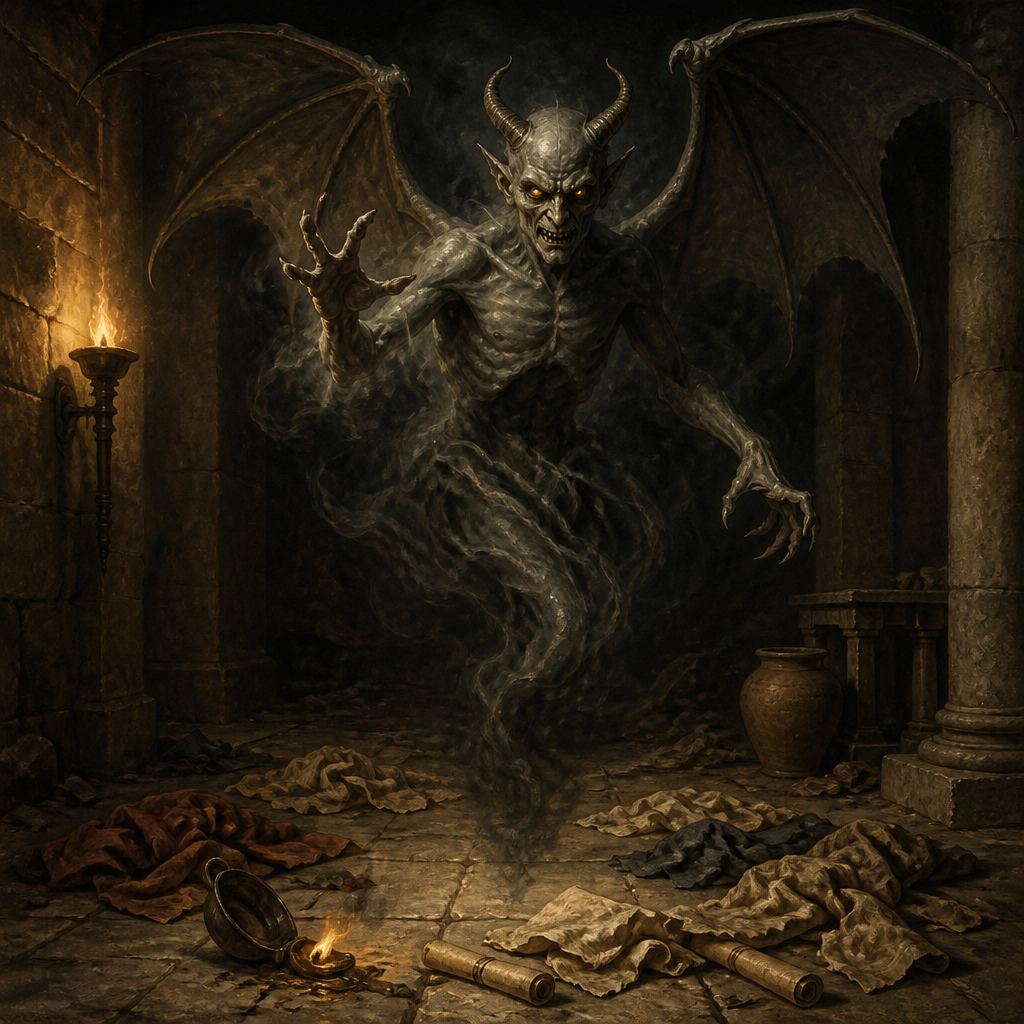
Legion is the name given by the unclean spirits who tormented the man Jesus met among the tombs in the region of the Gerasenes. The Gospels present Legion not as an ordinary human individual, but as a multitude of demons whose presence had shattered the man’s life, isolated him from society, and made him a sign of spiritual bondage.
When Jesus confronted the demons, they answered with the name “Legion,” a term drawn from the Roman military world and associated with a large organized force. The name emphasizes number, intimidation, and hostile occupation, while the miracle that follows shows Christ’s authority over even a massed demonic power. After Jesus commanded the spirits to leave, the restored man was found clothed, sane, and sent to proclaim what the Lord had done for him.
Background and Setting
Legion appears in the Synoptic Gospel accounts of Jesus’ encounter with a demon-oppressed man in the region east of the Sea of Galilee. Mark and Luke locate the scene among tombs, emphasizing ritual uncleanness, isolation, and danger. The man had been driven away from normal human community and could not be restrained even with chains. He lived among the dead, crying out and injuring himself, a vivid portrait of the destructive work attributed to the unclean spirits.
The name “Legion” is not a personal name in the usual sense. In the Roman world, a legion was a large military unit, commonly numbering thousands of soldiers. When Jesus asked, “What is your name?” the reply came: “My name is Legion, for we are many” (Mark 5:9). The answer identifies the speaking presence as a collective demonic host rather than a single man. The title therefore communicates both plurality and organized hostility.
The Encounter with Jesus
The demons recognized Jesus immediately and cried out before him. Their words show fear rather than faith: they knew his authority and begged not to be tormented or sent away before the appointed time. In the narrative, the initiative belongs entirely to Jesus. He crosses into Gentile territory, confronts the unclean spirits, and commands them to depart from the afflicted man.
At the demons’ request, Jesus permitted them to enter a herd of pigs nearby. The herd rushed down the steep bank into the sea and drowned. The episode is stark and unsettling, but its central point is clear: the spirits that had enslaved the man were destructive by nature, and Jesus’ command ended their dominion over him. The healed man’s transformation is immediate. Those who came to see what had happened found him sitting there, clothed and in his right mind.
Relationship to the Possessed Man
Legion should be distinguished from the man whom the demons possessed. The man was the victim of the demonic host, not the demonic host itself. The Gospels’ compassion falls on him as one restored by Jesus. Legion, by contrast, names the unclean spirits whose presence had dehumanized and endangered him.
This distinction matters because the story is not primarily a portrait of a frightening man, but a revelation of Christ’s mercy toward a tormented human being and his supremacy over spiritual evil. The man’s final role is positive: he becomes a witness, declaring throughout the Decapolis how much Jesus had done for him.
Spiritual Significance
The account of Legion demonstrates that Jesus’ authority extends beyond sickness, nature, and human opposition to the realm of demonic powers. The demons recognize him, fear his judgment, and obey his command. Their number does not make them equal to him; the name that suggests overwhelming force becomes a foil for the greater power of Christ.
The episode also shows restoration as a sign of the kingdom of God. A man once naked, violent, and isolated among tombs is returned to sanity, dignity, and mission. Legion represents destructive spiritual bondage, but the healed man represents the liberating mercy of Jesus. The story ends not with the demons, but with testimony: the restored man proclaims what the Lord had done for him.
Spiritual Significance
Legion is significant because the name concentrates the Gospel theme of Jesus’ authority over unclean spirits. The demons are many, organized, and terrifying, yet they cannot resist Christ’s command.
The account also guards against identifying afflicted people with the evil that oppresses them. The possessed man is delivered and restored, while Legion names the demonic host from which Jesus frees him.
Frequently Asked Questions
Who or what was Legion in the Bible?
Legion was the collective name used by the many demons who possessed the man Jesus met in the region of the Gerasenes.
Was Legion the name of the possessed man?
No. The Gospels use Legion for the unclean spirits, while the man himself is presented as their victim and later as one restored by Jesus.
Why did the demons call themselves Legion?
The name evokes a Roman military unit and emphasizes that the demons were many, organized, and intimidating.
Where does Legion appear in the Bible?
The account appears in Matthew 8:28-34, Mark 5:1-20, and Luke 8:26-39, with Mark and Luke giving the name Legion.
What happened after Jesus cast out Legion?
The demons entered a herd of pigs, which rushed into the sea, while the formerly possessed man was restored and sent to tell others what God had done for him.
Connected Figures
The Gerasene Demoniac
Man formerly oppressed by Legion
Jesus
Cast Legion out by divine authority
Agents of Satan
Category of hostile spiritual beings
The Evil Spirit at Ephesus
Another New Testament demonic spirit