People of Lamentations
The book of Lamentations names no individual, so this page has no people to list.
The book of Lamentations describes the devastation of Jerusalem following its siege and destruction, focusing on the collective suffering of the People of Lamentations. The text functions as a series of five poetic dirges that mourn the loss of the city’s glory, the starvation of its inhabitants, and the perceived abandonment by God. While the book is largely an anonymous communal cry, it identifies the primary subjects of this tragedy through their ancestral and national identities.
The narrative arc of the book begins with the personification of the city as a widow who has lost her children and her status among the nations. The text identifies the afflicted population as Judah noting that this tribe has gone into exile under affliction and harsh servitude (Lamentations 1:3). The poet describes how the adversaries of the nation have prevailed because of a multitude of transgressions, leading to the systematic removal of all who were once considered precious. The text emphasizes that the Lord has poured out his wrath against the strongholds of the daughter of Judah bringing the kingdom and its princes to the ground in dishonor (Lamentations 2:2).
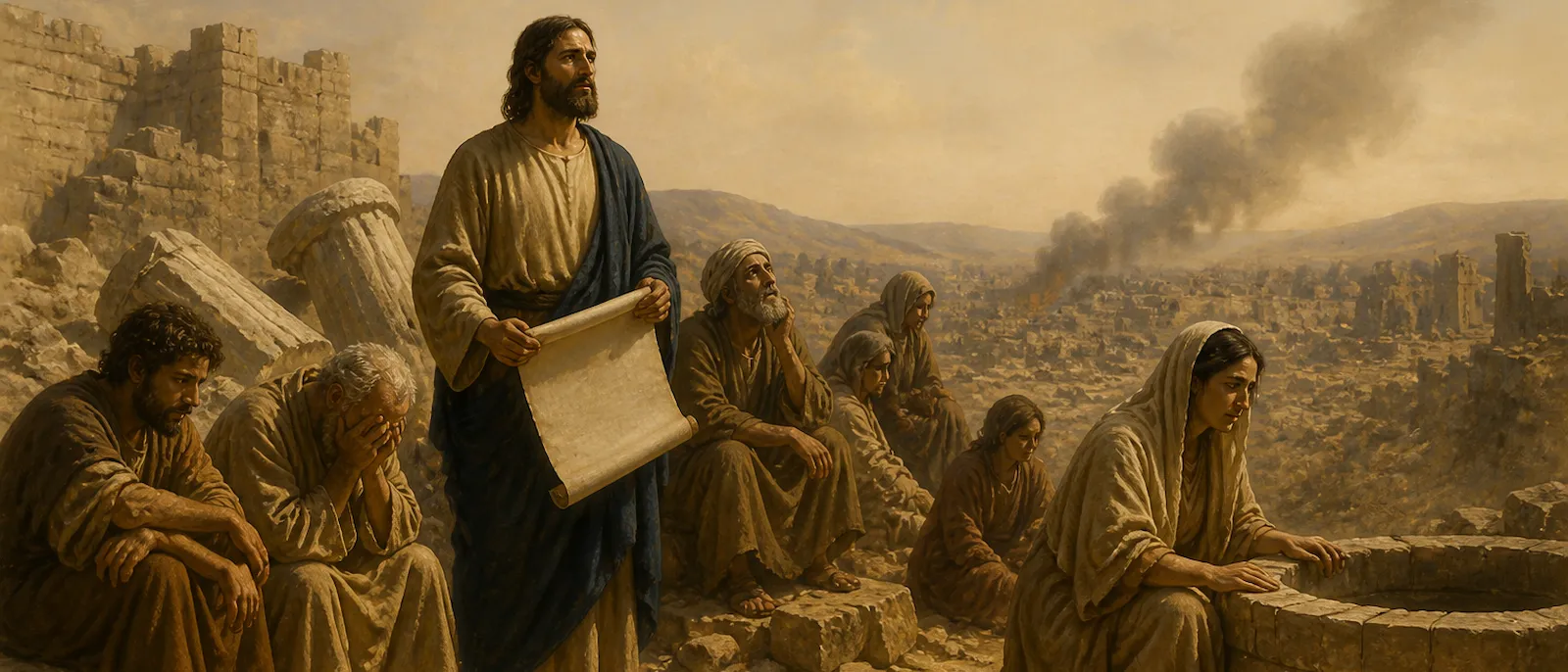
As the lamentation deepens, the focus shifts to the internal physical and spiritual agony of the survivors. The text describes the elders sitting on the ground in silence and the young women bowing their heads to the earth. It specifically invokes the name of Israel to describe the scale of the ruin, stating that the Lord has swallowed up all the dwellings of Jacob and cast down the splendor of Israel from heaven to earth (Lamentations 2:1–3). The poet laments that the Lord has become like an enemy to Israel destroying its palaces and increasing mourning and lamentation within the nation. The text does not say who the specific individual author is, but it records the voice of a man who has seen affliction by the rod of God's wrath (Lamentations 3:1).
The book concludes with a desperate plea for restoration and a recognition of the enduring sovereignty of God despite the current desolation. The final chapter recounts how the inheritance of the people has been turned over to strangers and their houses to foreigners. By grounding the suffering in the history of Judah and the broader identity of Israel, the text connects the immediate fall of Jerusalem to the long-standing covenant relationship between the people and their God. The book ends with a question regarding whether the Lord has utterly rejected the nation, leaving the future of the people unresolved (Lamentations 5:22).