What the passage records
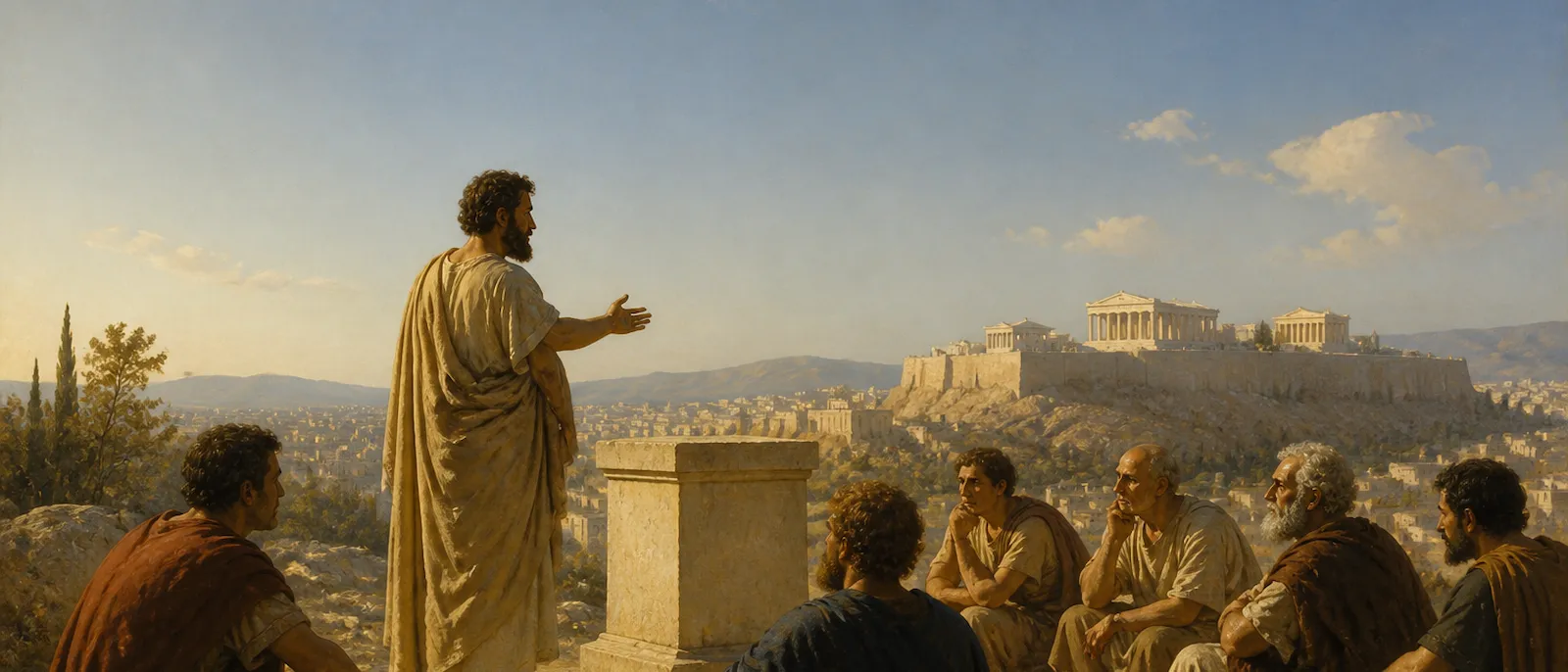
Acts 17:16-34While Paul waited for his companions in Athens, his spirit was provoked by the sight of the city full of idols. He began reasoning in the synagogue with the Jews and the God-fearing Gentiles, as well as in the marketplace daily with those who happened to be there (Acts 17:16-17). Certain Epicurean and Stoic philosophers encountered him, questioning what he was attempting to say. Because Paul preached Jesus and the resurrection, they brought him to the Areopagus to explain this new doctrine to the men of Athens who spent their time in nothing else but telling or hearing something new (Acts 17:18-21).
Paul stood in the midst of the Areopagus and noted that the Athenians were very religious. He described an altar he found with the inscription, 'TO THE UNKNOWN GOD,' and proceeded to proclaim this God to them as the Creator of the world and everything in it (Acts 17:22-24). He stated that God does not dwell in temples made with hands, nor is He served by human hands as though He needed anything. Paul explained that God made from one man every nation of men to dwell on the face of the earth, having determined their preappointed times and the boundaries of their dwellings (Acts 17:25-26). The text does not say the specific year in which this occurred, but it notes Paul told the assembly that God now commands all men everywhere to repent (Acts 17:30).
Paul concluded by asserting that God has appointed a day on which He will judge the world in righteousness by the Man whom He has ordained. He stated that God gave assurance of this to all by raising this Man from the dead (Acts 17:31). When the assembly heard of the resurrection of the dead, some mocked, while others said they would hear him again on the matter. Paul then departed from among them (Acts 17:32-33).
Who was there
3 people from Acts 17:16-34 are listed here.


